
Bohemia -The Promised Land
- by Cuba Charles
- •
- 12 Jun, 2017
- •
Text by Kevan Matthews
Arts | Culture
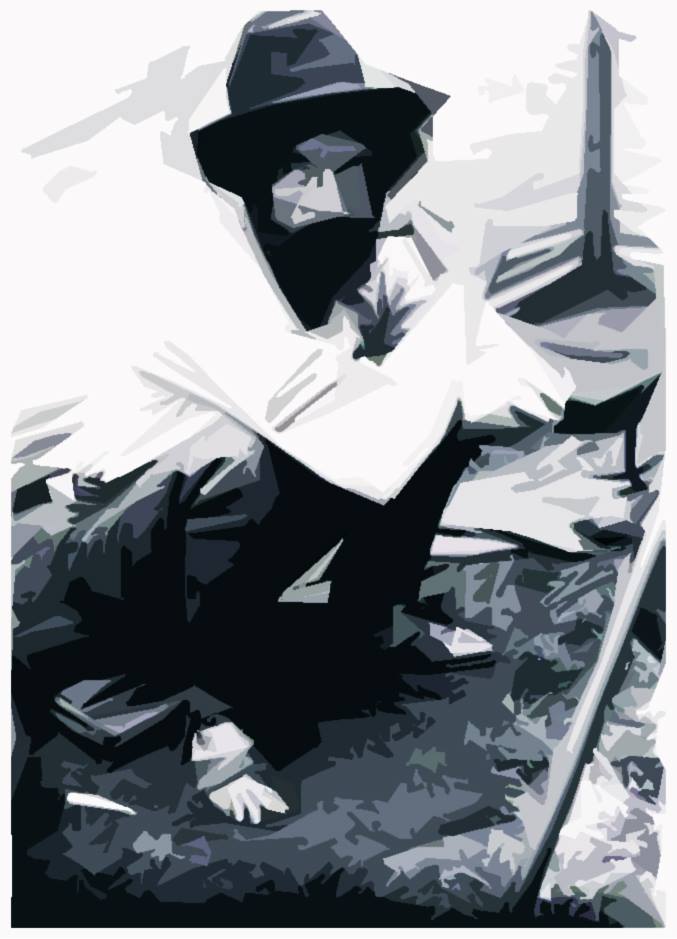
In Britain, around about a hundred years ago, actually, during the thirty-odd years between the end of the Victorian period and the beginning of the second world war, a generation of writers, poets and artists realigned their lives according to, what were at that time, a whole new set of new ideals, ideals which would scandalise society, questioning almost everything which society, at that time, stood for, lay the foundation for the rise of both the beatniks, and the hippies, who later followed, and create a framework which many of us simply, at the beginning of the twenty-first century, take for granted, and would find it difficult to live without.
Largely hailing from solid middle class families (the later beatnik and the hippy movements, essentially, represented the liberation of the working class, though reforming working class tastes proved, arguably, to be a more momentous challenge than were the educated middle class), they questioned almost every aspect of daily living. They sacrificed the luxury they’d been raised to accept as their social norm, for liberty. They showed almost complete contempt for convention and became pioneers of nothing short of a domestic, and creative, revolution.
The Bohemians are perhaps best known by the names of their key protagonists “The Bloomsbury Group”, who were an influential group of associated English writers, intellectuals, philosophers and artists, the best known members of which included Virginia Woolf, John Maynard Keynes, E. M. Forster and Lytton Strachey. This loose collective of friends and relatives lived, worked or studied together near Bloomsbury, in London, from where the group derived the name for which they became known publicly - the area, with its various creative and educational institutions, including the Barlett School of Architecture and the Slade School of Art and Design, is still synonymous with cutting-edge creativity. Although its members, apparently, denied being a group in any formal sense, they were united by an abiding belief in the importance of the arts to a civilised society. Their works and outlook have, since, deeply influenced literature, aesthetics, criticism, and economics, as well as modern attitudes towards feminism, pacifism, and sexuality.
However, for every one of those, most influential, of the, so called, bohemian society, in Britain throughout the first half of the twentieth century, there were literally hundreds of artists, writers, free- critical-thinkers, whom, detesting the starchy control, and stifling expectation, of “polite society” took the decision to re-write the rules, or completely dispense with the need for any rules, beyond the basic rule of law, and goodness knows at that point in time there were a plethora of out-moded, archaic laws which were much in need of reform – the draconian laws regarding sex, sexuality, and homosexuality for example. However, I’m not going to discuss sexuality in this article, as its so significant a subject as to demand space of its own.
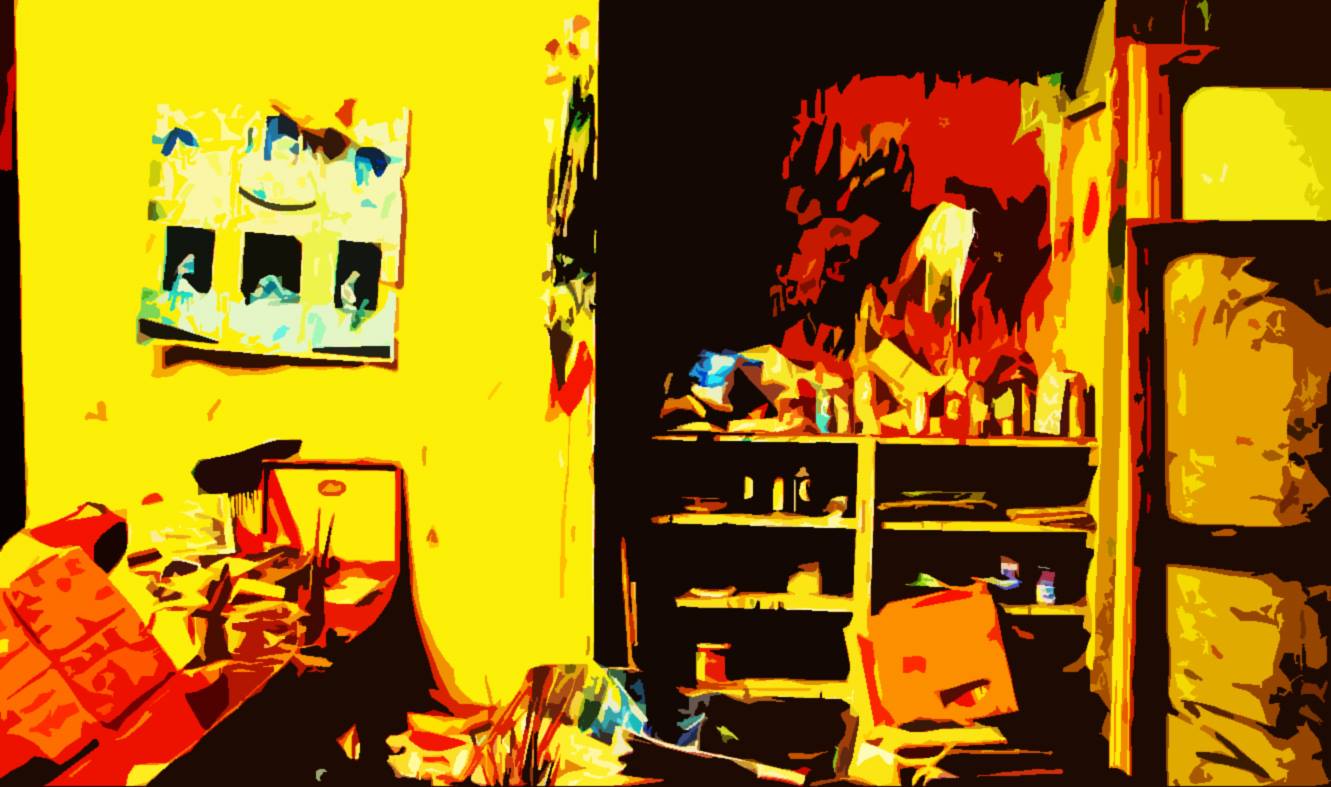
Many bohemians were young, relatively affluent, creative individuals who despised the strict upbringing imposed upon them by their, authoritarian, frigid, Vicwardian parents, they were often damaged survivors of an oppressive, often abusive, childhood regime, who craved for a more liberal lifestyle and freedom of expression in regard to both their art and their desires. They were, essentially, relatively well educated, creative, critical thinkers, who wished to shake-off the shackles of an earlier, less enlightened, age, some of whom paid for their chosen path with expulsion and exile from the family home, and disinheritance from the family wealth. Often a brave choice, given that most of that social group had grown-up never having had to do anything, domestically speaking, for themselves. Subsequently whilst Bohemia became known for its free thinking, its artistic experimentation, and its wonderfully liberal attitudes, it also became recognised for its relative squalor, and, for some, malnutrition. Feeding one’s family, and cleaning for oneself, when you previously had a team of servants to do so, when you’re living in a one-bedroomed-flat in Camden, with no running water, a shared bathroom, a single gas ring on which to cook, and very little money with which to feed and clothe yourself, and procure the tools and materials of one’s “trade”, doesn’t come without its challenges.
However, for many, the resulting freedom outweighed the difficulties. For example, for Nicolette Macnamara (artist and author) and Nancy Sharp (Painter), who, as Slade students (among the “Slade Cropheads”) in the 1920’s, shared a “disgusting flat” in Adelaide Road, the “decision” to dispense with cleanliness was an utterly conscious one.
“… we lived in squalor. The beds were like old dog baskets. Our washing and laundry piled up in a corner for weeks on end, in an emergency I washed a vest and a pair of stockings in the bath with me; this was an old geyser bath that we shared with the rest of the house. The stews were wreathed in fungus and the food rotted in the saucepans. The washing-up fowled the sink until we washed-up in desperation so that we could eat. Our clothes hung on hooks from the wall when they were not on the floor among the canvases and empty beer bottles left over from parties. The mice approved of our way of living and multiplied… We were terribly happy…"
However, whilst Ms Woolf advocated that every woman should be afforded “a room of one’s own”, both physically and metaphorically, in which she might be afforded the time, and space to express herself, in reality, once that room might have been secured and occupied, the females among our bohemian forbears often found that their male counterparts weren’t quite so egalitarian, liberal, or enlightened as they might first have appeared. Where the ‘equal share’ of domestic drudgery and the raising of children were concerned, an older, more familiar, brand of chauvinism frequently resurfaced, and “that” work fell to the female of the “partnership”.
For example, When Stella Bowe (artist and writer) lived with the writer Ford Maddox Ford, between 1918 and 1927, her own work was, largely, compromised, even abandoned, for a time, whilst she assumed the “expected” traditional role of housewife and mother.
In a letter to a friend she admitted “My painting has, of course, been hopelessly interfered with by the whole shape of my life, for I have been learning the technique of quite a different role; that of consort to another and more important artists. So that although Ford is always urging me to paint, I simply don’t have any creative vitality to spare after I had played my part toward him and Julie (their daughter), and struggled through the day’s chores… pursuing an art is not just a matter of finding the time – it’s a matter of having a free spirit to bring to it.”
So, whilst the road to Bohemia is clearly strewn with disappointment, under achievement, unrealised potential, and starvation (in some cases literally), with pretention and affected manners, and whist the likes of Augustus John (talented painter, draughtsman, and etcher) and Dorelia McNeill furnished us with the ubiquitous, stereotypical, shabby chic, artists uniform, which, it has to be said, has been adopted, proudly, at one point or another, and worn upon the sleeve, by every charlatan you ever met, Bohemia, though its roots were flawed, formulated the progressive manifesto for our future. It/they has/have bequeathed to us a wealth of talent, and a body of work which inspires us to this day. “It” helped lay the foundation of the liberal, egalitarian, culture that current generations, in Britain, and other parts of the west, have grown to know, to love, and to expect, a culture who’s values are, at the beginning of the twenty-first-century, under increasing threat from numerous directions.
We owe it to our Bohemian forbears, and we owe it to ourselves, to regenerate the manifesto of Bohemia, to open it to everyone, of all backgrounds, who care to join us… Long live Bohemia, the promised land of high ideals, free-critical-thinking, and freedom of expression .
However, for many, the resulting freedom outweighed the difficulties. For example, for Nicolette Macnamara (artist and author) and Nancy Sharp (Painter), who, as Slade students (among the “Slade Cropheads”) in the 1920’s, shared a “disgusting flat” in Adelaide Road, the “decision” to dispense with cleanliness was an utterly conscious one.
“… we lived in squalor. The beds were like old dog baskets. Our washing and laundry piled up in a corner for weeks on end, in an emergency I washed a vest and a pair of stockings in the bath with me; this was an old geyser bath that we shared with the rest of the house. The stews were wreathed in fungus and the food rotted in the saucepans. The washing-up fowled the sink until we washed-up in desperation so that we could eat. Our clothes hung on hooks from the wall when they were not on the floor among the canvases and empty beer bottles left over from parties. The mice approved of our way of living and multiplied… We were terribly happy…"
However, whilst Ms Woolf advocated that every woman should be afforded “a room of one’s own”, both physically and metaphorically, in which she might be afforded the time, and space to express herself, in reality, once that room might have been secured and occupied, the females among our bohemian forbears often found that their male counterparts weren’t quite so egalitarian, liberal, or enlightened as they might first have appeared. Where the ‘equal share’ of domestic drudgery and the raising of children were concerned, an older, more familiar, brand of chauvinism frequently resurfaced, and “that” work fell to the female of the “partnership”.
For example, When Stella Bowe (artist and writer) lived with the writer Ford Maddox Ford, between 1918 and 1927, her own work was, largely, compromised, even abandoned, for a time, whilst she assumed the “expected” traditional role of housewife and mother.
In a letter to a friend she admitted “My painting has, of course, been hopelessly interfered with by the whole shape of my life, for I have been learning the technique of quite a different role; that of consort to another and more important artists. So that although Ford is always urging me to paint, I simply don’t have any creative vitality to spare after I had played my part toward him and Julie (their daughter), and struggled through the day’s chores… pursuing an art is not just a matter of finding the time – it’s a matter of having a free spirit to bring to it.”
So, whilst the road to Bohemia is clearly strewn with disappointment, under achievement, unrealised potential, and starvation (in some cases literally), with pretention and affected manners, and whist the likes of Augustus John (talented painter, draughtsman, and etcher) and Dorelia McNeill furnished us with the ubiquitous, stereotypical, shabby chic, artists uniform, which, it has to be said, has been adopted, proudly, at one point or another, and worn upon the sleeve, by every charlatan you ever met, Bohemia, though its roots were flawed, formulated the progressive manifesto for our future. It/they has/have bequeathed to us a wealth of talent, and a body of work which inspires us to this day. “It” helped lay the foundation of the liberal, egalitarian, culture that current generations, in Britain, and other parts of the west, have grown to know, to love, and to expect, a culture who’s values are, at the beginning of the twenty-first-century, under increasing threat from numerous directions.
We owe it to our Bohemian forbears, and we owe it to ourselves, to regenerate the manifesto of Bohemia, to open it to everyone, of all backgrounds, who care to join us… Long live Bohemia, the promised land of high ideals, free-critical-thinking, and freedom of expression .


MAHARISHI SPRING/SUMMER 2019 “SS SNA FU: THE MARRIAGE OF HEAVEN AND HELL' LOOKBOOK


BURBERRY BY RICCARDO TISCI AUTUMN/WINTER 2019 COLLECTION @ LFW